Deep tissue vs sports massage: the difference
RHEA Dubai team · Updated 3 November 2026
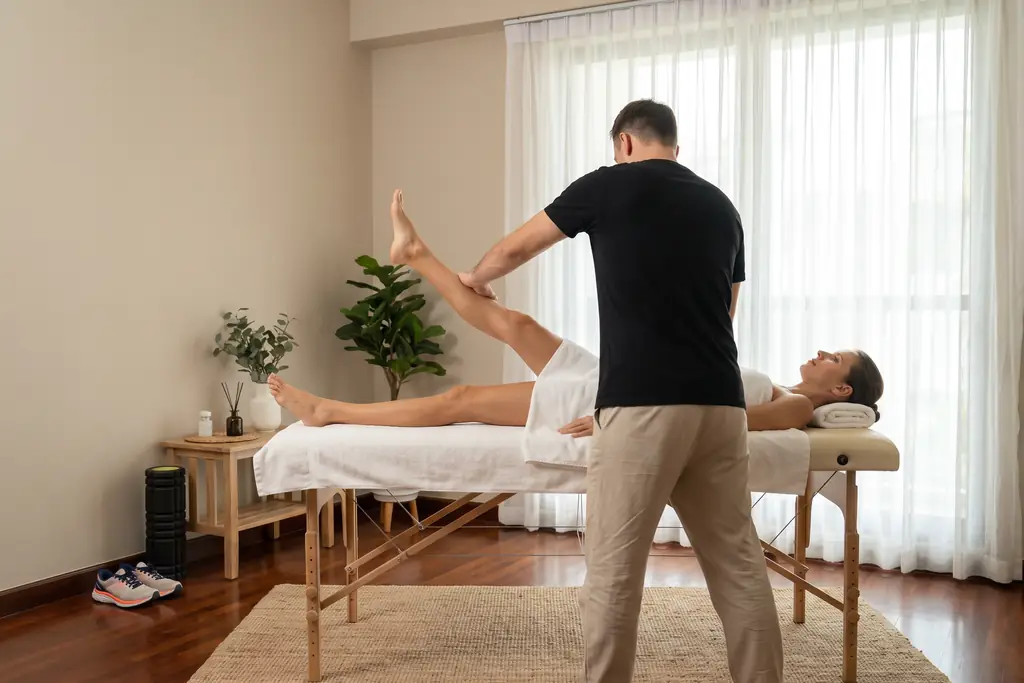
Deep tissue and sports massage both use firm pressure. The difference is the plan behind the session. Deep tissue follows where you feel tight today, with slow, sustained work on a few areas. Sports massage follows your training: the muscles you use, the event ahead and the days around it, often with stretching and a varied pace.
Key takeaways
- Both use firm pressure, about 4 on a 1 to 5 scale. The plan behind the session is what differs.
- Deep tissue is slow and focused on two or three areas where you feel tight.
- Sports massage is planned around your training and often adds stretching.
- Before an event, sports massage is lighter and earlier. After, it can be firmer.
- Both cost the same at RHEA: AED 400 for 60 minutes, AED 550 for 90 and AED 700 for 120.
Deep tissue and sports, side by side
If you already know you like firm pressure, the choice between these two comes down to why you are booking. Here is how they compare, point by point. Pressure is shown on a simple 1 to 5 scale as a guide; your therapist adjusts it to you on the day.
- Pressure: deep tissue about 4 of 5, firm and sustained. Sports about 4 of 5, firm but varied.
- Pace: deep tissue slow and steady. Sports a mix of brisk and slow strokes.
- Plan: deep tissue follows where you feel tight today. Sports follows your training and events.
- Stretching: deep tissue little or none. Sports often included.
- Focus: deep tissue two or three chosen areas. Sports the muscles your sport loads most.
- Timing: deep tissue whenever suits you. Sports planned around hard sessions, races and matches.
- Best for: deep tissue for desk tension and general tightness. Sports for runners, padel players, lifters and cyclists.
What deep tissue is for
A deep tissue massage uses slow, sustained pressure from the forearms, knuckles and palms. The therapist stays longer on each area and works gradually deeper as the muscles allow. It is slower than most people expect, and it should feel firm and focused, never sharp.
The session follows where you feel tight on the day. That makes it a natural fit for tension that comes from how you live rather than how you train: the upper back and neck after long days at a laptop, the lower back after hours of driving, the shoulders after a stressful month.
In 60 minutes, two or three areas plus a short full-body finish is realistic. Many people choose 90 minutes, because the slow pace of deep tissue needs time. If you simply like firm pressure and do not train for anything in particular, deep tissue is the simpler choice.
What sports massage is for
A sports massage uses firm techniques too, but it is shaped by your training rather than by how you feel on one day. The therapist asks what you do, how often, what you trained this week and what is coming up. The session then focuses on the muscles your sport loads most.
The pace is more varied. Brisker strokes warm an area up, slower and firmer work follows on tight spots, and assisted stretches are often part of the session. It can feel more active than deep tissue.
Sports massage is not only for professional athletes. If you run along the Marina a few times a week, play padel at the weekend, lift in the gym or ride long distances, it is built for you. The more you tell the therapist about your training, the better they can plan the hour.
Timing around training and events
Timing is where the two differ most. Deep tissue can be booked whenever it suits you, as long as you keep it away from a hard training day. Sports massage is planned around your calendar.
Before an event, a sports session is lighter and shorter in intensity, usually two or three days before a race or match. It is not the time to try deep, firm work for the first time. After an event or a heavy training week, a session can be firmer, with time on calves, hamstrings, hips and shoulders, once a day or two has passed.
During a long training block, many people book every two to four weeks. Our massage for the Dubai Marathon guide sets out a simple calendar from training block to taper and race week, and how often you should get a massage covers rhythm by goal.
Which one for your sport
If you train, the honest answer is usually sports massage, because the session is shaped around what you do. But some weeks you just want firm work on a stiff back, and deep tissue is perfect for that. Here is a quick guide.
- Running: sports, with focus on calves, hamstrings, hips and feet. Lighter in race week.
- Padel and tennis: sports, with time on the shoulders, forearms and the side that does more work.
- Gym and lifting: sports around heavy blocks; deep tissue on the back on a rest week.
- Cycling: sports, with focus on quads, hips and the lower back.
- Swimming: sports, with time on the shoulders, chest and upper back.
- Desk job, no regular training: deep tissue on the upper back and neck.
- Desk job and the gym: alternate. Deep tissue after a heavy work month, sports in a training block.
How each feels afterwards
After either session, most people feel warm, loose and a little slow. Sit for a moment before you stand, drink some water and take it easy for the rest of the day. Keep heavy training for another day.
After firm work, an area may feel a little tender the next day, a bit like after a new workout. That usually fades within a day. Sports massage can leave you feeling more mobile thanks to the stretching, while deep tissue tends to leave a heavier, deeply relaxed feeling.
Firm should never mean painful. In both styles, say so straight away if the pressure is too much. If something feels sharp or unusual, or if you have a fresh injury, a recent operation or swelling, skip the massage and check with your doctor first.
Length, price and booking
Sixty minutes (AED 400) suits deep tissue on one or two areas, or a lighter pre-event sports session. Ninety minutes (AED 550) is the most popular length for both, with time for focused work and a full-body finish. One hundred and twenty minutes (AED 700) suits a full recovery session after a race or a long training block.
The price does not change with the style. Popular add-ons for firm sessions include the Muscle Relax Oil (AED 45). Unsure between deep tissue and something gentler? Read Swedish vs deep tissue massage, or see all prices.
How it works with RHEA
A RHEA therapist comes to your apartment, villa, hotel room or holiday home in Business Bay, Downtown Dubai, DIFC, Dubai Marina (including Bluewaters), JBR, Palm Jumeirah, JLT, Al Barsha, JVC, Jumeirah, Dubai Hills and Dubai Creek Harbour, plus Abu Dhabi. Your therapist brings a professional massage table, fresh linens and oils.
60 minutes AED 400, 90 minutes AED 550, 120 minutes AED 700. Travel within our areas is included. Every day from 8am to 10pm. A late session can end as late as 1am.
Training by the water? See massage at home in Dubai Marina and JBR. You can book the same day with at least 4 hours of notice, when a therapist is free.
Questions, answered
Anything else? Write to general@rhea.ae and we will reply personally.
Is deep tissue the same as sports massage?
No, though both use firm pressure. The difference is the plan behind the session. Deep tissue follows where you feel tight today, with slow, sustained work on a few areas. Sports massage is planned around your training and events, often with stretching and a more varied pace.
Which is better for runners, deep tissue or sports?
Usually sports massage, because it is planned around your mileage and race dates, with focus on calves, hamstrings and hips. Deep tissue can still suit a rest week, or when your back or neck feels tight from work rather than running.
Is sports massage more painful than deep tissue?
Neither should be painful. Both use firm pressure, but it should feel strong and never sharp. Sports massage has a more varied pace and stretching, so it can feel more active. Tell your therapist straight away if the pressure is too much.
Can I get a sports massage if I do not play a sport?
Yes, but if you do not train regularly, deep tissue is usually the simpler choice. It follows how you feel on the day. Sports massage works best when there is a training routine or an event to plan around. You can switch styles from one booking to the next.
How long before a race should I get a sports massage?
Usually two or three days before, at a lighter intensity, and only with a style you have had before. Save firmer recovery work for a day or two after the event. Our guide to massage for the Dubai Marathon has a full calendar from training block to race week.
Do deep tissue and sports massage cost different amounts?
No. 60 minutes AED 400, 90 minutes AED 550, 120 minutes AED 700. Travel within our areas is included, whichever style you choose. Longer sessions simply give the therapist more time for focused work and a full-body finish. See all prices.
Should I feel sore after deep tissue or sports massage?
Some people feel a little tender for a day after firm work, a bit like after a new workout. It usually fades quickly. Drink water, rest and skip hard training that day. If something feels sharp or does not settle, check with your doctor.
Ready for a massage at home?
60 min AED 400 · travel included. Your therapist brings a professional massage table, fresh linens and oils.